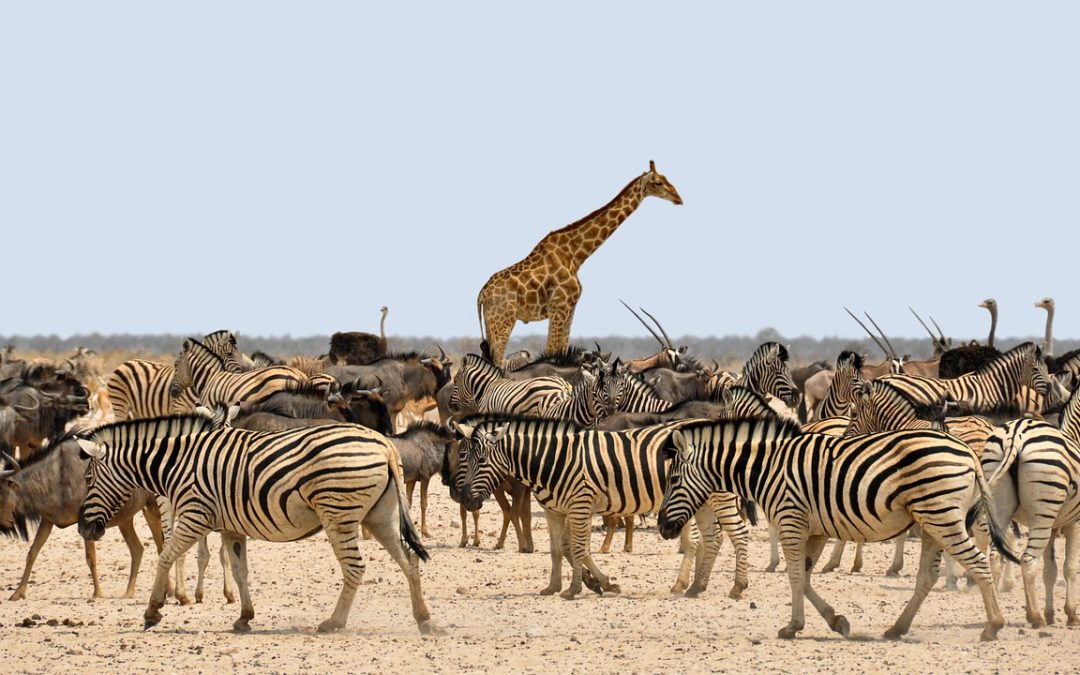
Let’s talk about Etosha National Park—a place that needs no introduction but absolutely deserves one. Located in northern Namibia, it’s one of Africa’s top wildlife destinations, spanning over 22,000 square kilometers of breathtaking landscapes, from dusty salt pans to mopane woodlands. Here, it’s all about the animals—and, trust me, they know they’re the stars of the show. ⭐️🦓
The Etosha Pan: Nature’s Giant White Stage 🤍
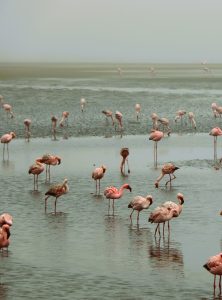
First things first: the heart of Etosha is the vast Etosha Pan, a massive, flat, and blindingly white salt flat that can be seen from space (seriously 🛰️). During the dry season, it looks like an otherworldly desert, but when the rains come, it transforms into a shallow lake, attracting thousands of flamingos that treat it like a pop-up luxury spa 🦩💧. The pan makes for a spectacularly surreal backdrop for wildlife viewing, and you’ll feel like you’ve stepped into a Martian landscape where zebras and antelopes are extras on set.
The Watering Holes: Where the Action Happens 🐾
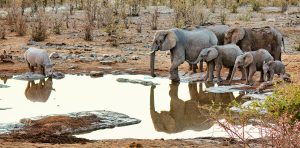
Etosha is unique among African game reserves for its system of watering holes—natural and man-made—scattered throughout the park. These spots are like a 24-hour diner for wildlife: elephants, lions, zebras, giraffes, rhinos—you name it, they all swing by for a drink 🍹🐘. There’s no need to chase down animals; just park yourself at a watering hole, grab your binoculars, and enjoy the show. 🎭
Watching the drama unfold here is like binge-watching nature’s reality TV 📺. There’s tension when predators show up, hilarious posturing among rival antelopes, and tender moments when mothers lead their young to drink 🦒. One minute, everything is calm, and the next, an elephant herd rolls in, and everyone else decides they have other places to be 🐘🦓.
Wildlife Galore: From the Big (and Hairy) to the Small (and Sneaky) 🦏🦊
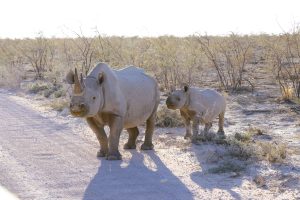
Etosha is a haven for wildlife enthusiasts. It’s home to over 100 mammal species, including elephants, lions, leopards, cheetahs, rhinos (both black and white), giraffes, and various antelopes like kudu, oryx, and the adorable little dik-dik (basically the park’s version of a wide-eyed woodland fairy 🧚).
You’ve also got the “Etosha Specials”—animals that you’re more likely to see here than in other parts of Southern Africa. Take the black-faced impala, for example, a species endemic to the region 🦌. Or the quirky bat-eared fox, which will make you do a double-take with its oversized ears 🦊👂.
Birdwatchers, rejoice! Over 340 bird species have been recorded in Etosha 🦅. You’ll spot majestic raptors like martial eagles, comical ostriches running about 🐦, and, during the wet season, large flocks of flamingos. Trust us, even if you’re not a birder, you’ll be impressed. 🐤🌅
The Roads and Campsites: Self-Drive Safari Heaven 🚙
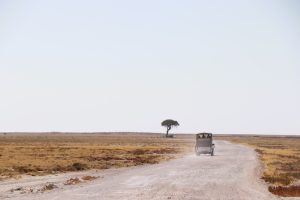
One of the great things about Etosha is that it’s incredibly accessible for self-drive safaris. The park’s network of gravel roads is well-maintained, and most rental cars (especially 4x4s) can easily handle them 🚗. Plus, there’s a certain freedom in charting your own course through Namibia’s wilderness 🌍.
The main camps—Okaukuejo, Halali, and Namutoni—offer everything from comfortable chalets to campsites 🏕️. They all have their own floodlit watering holes, which means you can sit with a drink in hand and watch a lion stroll up for a midnight sip while you’re still in your pajamas 🦁🌙. It’s the kind of surreal experience that Etosha delivers in spades.
The Best Time to Visit: Dry Season vs. Wet Season ☀️🌧️
When should you visit Etosha? It depends on what kind of adventure you want. The dry season, from May to October, is peak game-viewing time because animals congregate around watering holes, making it easier to spot them 👀🦓. The downside? You’ll have to deal with some dust (and possibly a tan that you’ll never quite scrub off 🌞).
The wet season, from November to April, brings lush greenery, dramatic skies, and fewer tourists 🌿⛈️. It’s great for birdwatching and for seeing baby animals—an adorable bonus 🐣. The animals spread out a bit more, but the park has a magical charm when it transforms from arid savanna to lush oasis.
Respecting the Park: Wildlife Conservation and Responsible Tourism 🌍🌿
While we’re out here gushing about Etosha, it’s worth remembering that this park isn’t just about entertainment—it’s a vital conservation area. From protecting endangered black rhinos to conserving habitats for hundreds of species, Etosha plays a huge role in Namibia’s wildlife heritage 🦏🛡️. When you visit, be mindful of park rules, respect the animals’ space, and tread lightly. You’re not just on safari—you’re a guest in one of Africa’s most precious ecosystems 🤝🐾.
Closing Thoughts 🌅
Etosha National Park isn’t just a place to see wildlife—it’s a place where the wild sees you. You’ll find yourself humbled by the majesty of a lion’s roar 🦁, enchanted by the sight of a giraffe silhouetted against a fiery sunset 🦒🌇, and maybe a little dusty by the end of the day. But you’ll leave with stories (and photos) you’ll never tire of sharing 📸. So pack your sense of adventure (and maybe some extra snacks)—Etosha is calling! 🎒🌍